
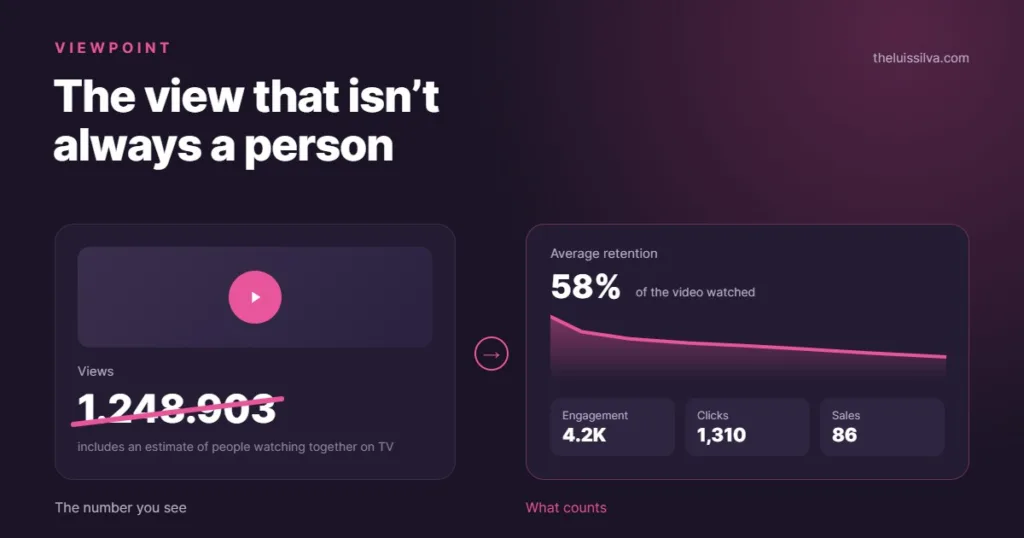
On 16 November, YouTube announced that public view counts now include estimates of “co-viewing”: how many people are watching the same video together on a TV. The reason given is the weight of television, with more than a billion hours of YouTube watched every day on TV screens.
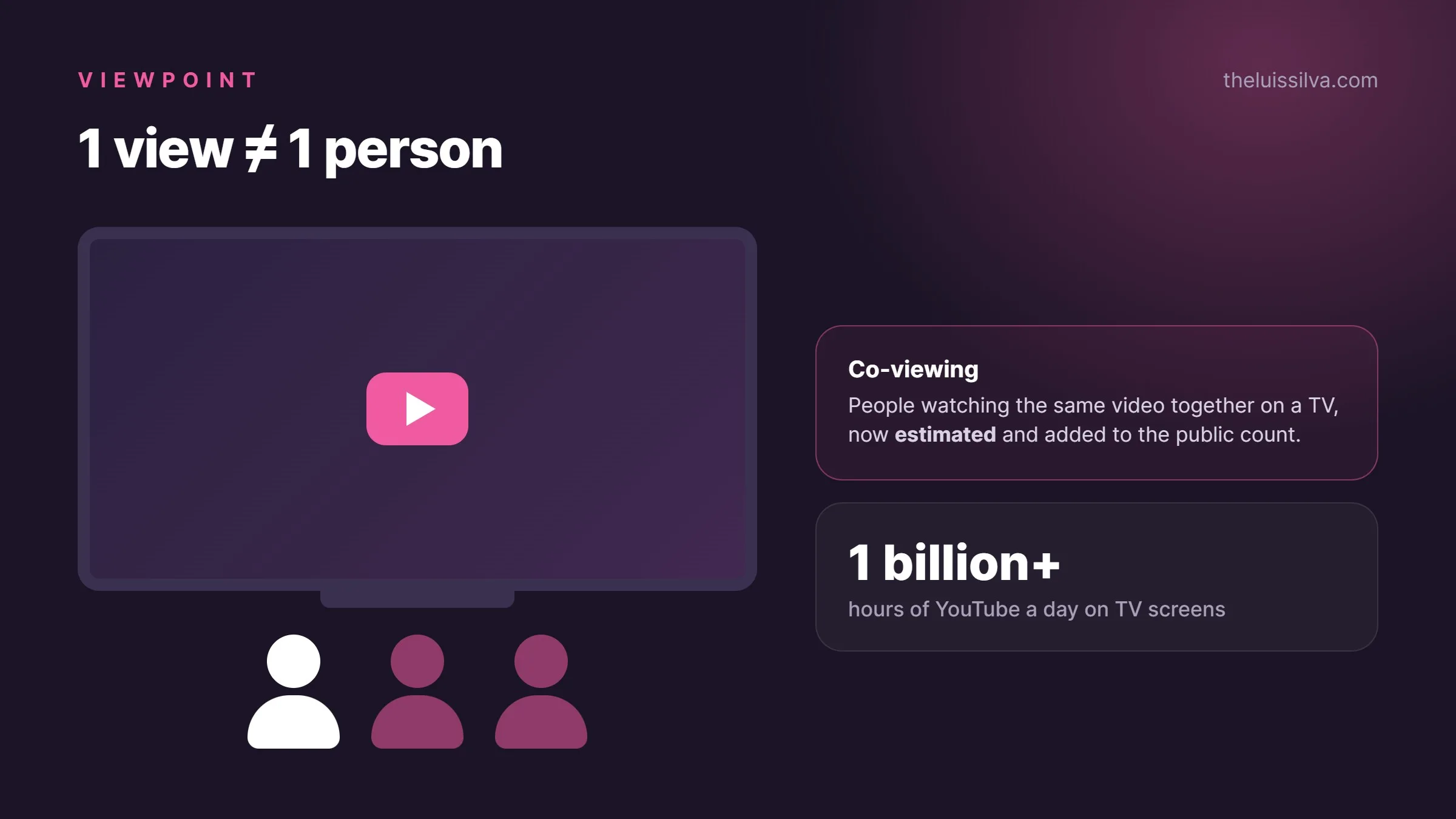
It makes sense. A video watched in the living room by a whole family reaches more people than a video watched on a phone by one person. The problem is in the detail.
A number that is now estimated
YouTube has not explained how it calculates this estimate. We do not know which signals it uses or what the margin of error is. And the metrics used to pay creators are left out: payments do not change.
In other words, YouTube itself does not use this number for anything involving money. But it is exactly the number shown under every video, and it is often the number shown to a brand to justify a budget.
An old lesson that is urgent again
For marketers, this is not new: the big number under the video has always been a vanity metric. Now it is also, in part, an estimate produced by a model that nobody outside can check.
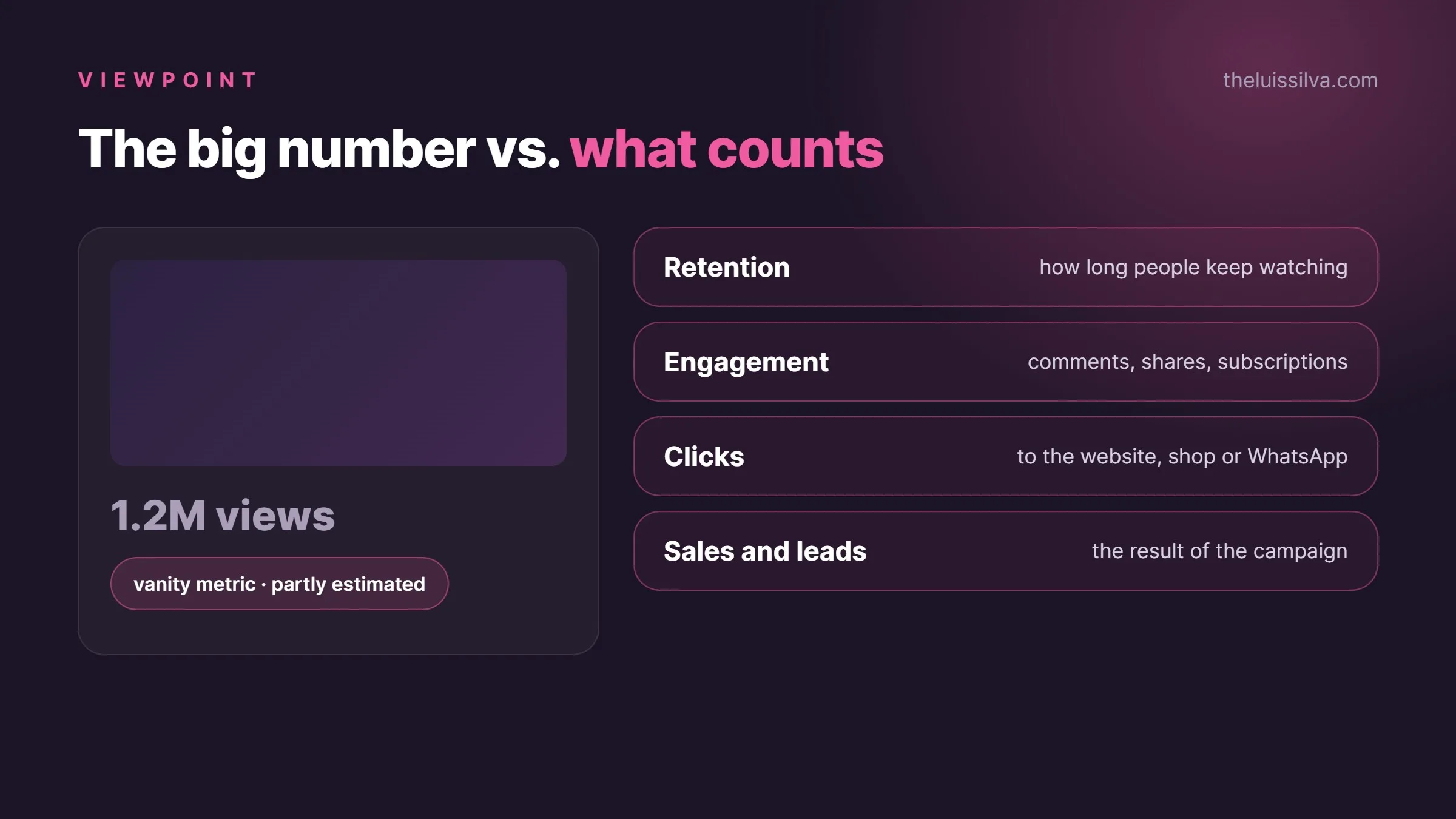
What counts is still the same:
Retention
how long people keep watching, and when they leave.
Engagement
comments, shares, likes, subscriptions.
Clicks
how many people leave the video for the website, the shop or WhatsApp.
Sales and leads
the result the campaign was supposed to deliver.
A simple rule for brands that hire creators
A good creator has nothing to hide in this data. On the contrary, it is usually the best way to show the value of their work.


